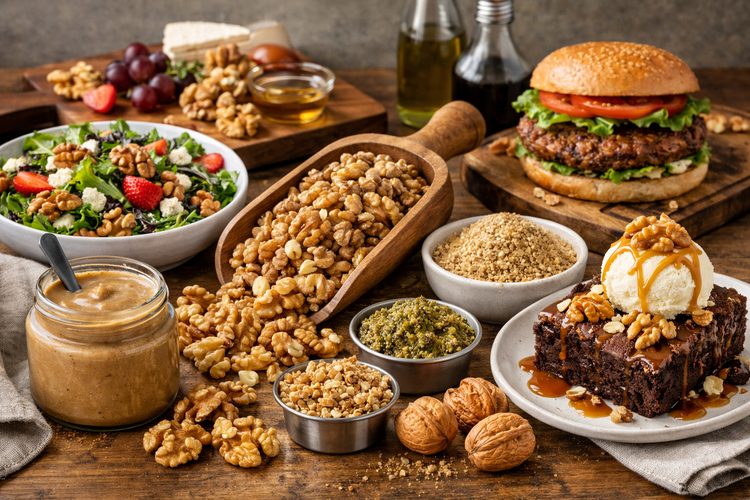
Foodservice walnut usage is defined less by commodity grading and more by speed, consistency and menu function. Unlike industrial manufacturing, kitchens operate under time pressure, variable staff skill levels and portion control constraints. That makes walnut format selection a practical decision: what works consistently on the line, across shifts, and across locations.
How walnuts show up in real foodservice menus
Walnuts are widely used across casual dining, premium restaurants, catering operations and institutional kitchens. Their role typically falls into five functional categories:
- Texture contrast in salads and bowls
- Crunch and topping in desserts and bakery
- Base ingredient in sauces, spreads and fillings
- Protein and fat component in plant-forward dishes
- Premium visual cue in plated dishes
Each of these requires a different walnut format. A salad topping requires clean, visually appealing pieces. A sauce may require fine meal or paste. A plated dessert may need intact halves. The correct sourcing decision depends on where the walnut sits in the dish.
Format selection for foodservice kitchens
Walnut halves
Best suited for high-visibility applications such as plated desserts, cheese boards, premium salads and garnishes. They deliver visual value but are slower to portion and less efficient for high-volume prep.
Pieces and chopped walnuts
Most common foodservice format. Easier to portion, faster to apply, and more consistent in cost per serving. Ideal for salads, toppings, grain bowls and bakery finishing.
Small pieces and meal
Used where walnuts are integrated into recipes: pesto-style sauces, fillings, spreads, coatings or dough systems. These formats reduce prep time and improve consistency.
Walnut butter or paste
Relevant in modern menus for sauces, emulsions, desserts and plant-based dishes. Provides creaminess and flavor without visible texture.
Raw vs roasted in foodservice
Raw walnuts offer flexibility. Kitchens can toast them in-house to control flavor, aroma and service timing. This is common in restaurants that want fresh-to-order preparation.
Roasted walnuts offer speed and consistency. They reduce prep steps and ensure uniform flavor across locations. This is often preferred in chains, catering operations and centralized kitchens.
Operational note: kitchens with limited prep time typically benefit from pre-roasted or pre-cut walnut formats, even if the nominal ingredient cost is higher.
Menu applications by segment
Salads and bowls: walnuts add crunch, fat balance and premium perception. Medium pieces are usually preferred for even distribution.
Bakery and desserts: walnuts are used in brownies, cakes, pastries and toppings. Pieces or meal are typically more efficient than halves unless presentation matters.
Sauces and spreads: walnut meal or paste supports consistent blending and faster prep.
Plant-based dishes: walnuts contribute texture and richness in meat alternatives, fillings and grain-based dishes.
Cheese boards and appetizers: halves or large pieces are used for visual appeal and premium positioning.
What foodservice buyers should define before sourcing
- Menu role (topping, ingredient, garnish, base)
- Preferred cut size and visual expectation
- Prep capability (in-house roasting vs ready-to-use)
- Volume and portion control needs
- Storage conditions and turnover speed
Without these inputs, quotes may not reflect the real kitchen requirement.
Commercial considerations in foodservice
Foodservice buying prioritizes consistency over optimization. A product that is slightly more expensive but reduces prep time, waste and variability often delivers better overall value.
Packaging also matters. Bulk packs support central kitchens, while smaller formats suit restaurants with limited storage or slower turnover. The correct pack size reduces waste and improves operational flow.
Common sourcing mistakes
- Choosing halves when pieces would improve speed and cost
- Over-specifying color where it does not affect the dish
- Ignoring prep labor when comparing prices
- Using inconsistent cut sizes across locations
These issues usually result in higher total cost rather than savings.
Buyer planning note
Atlas Global Trading Co. approaches foodservice walnut supply by focusing on application first. The goal is not just to supply walnuts, but to match format, packaging and supply structure to the kitchen environment.
If you are sourcing for foodservice, define the dish role, prep workflow and volume. This allows Atlas to propose California walnut options that align with real operational needs rather than generic specifications.
Need help sourcing walnuts for foodservice?
Turn your menu concept into a quote request with clear format, volume and workflow requirements.
- Define walnut format and cut size
- Specify prep method (raw or ready-to-use)
- Include volume and service model
Frequently Asked Questions
How should foodservice buyers choose the right walnut format?
Match the format to the dish. Use halves for presentation, pieces for efficiency and meal for integration into recipes.
Are roasted walnuts better for kitchens?
Roasted walnuts save time and improve consistency, while raw walnuts allow more control. The choice depends on kitchen workflow.
What matters most in foodservice walnut sourcing?
Consistency, prep efficiency, packaging and reliable supply matter more than nominal price.