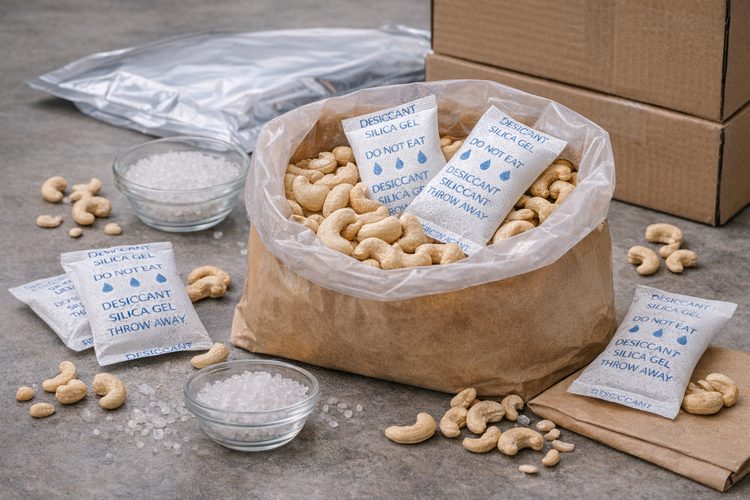
Moisture and shelf-life planning matter in cashew programs because industrial nut buying is rarely only about nominal price or product availability. The stronger commercial outcome usually comes from aligning product form, moisture expectations, packaging route, storage assumptions and shipment timing before the order is placed. In many practical supply programs, shelf life is not a passive attribute. It is an operational variable that directly affects quality acceptance, warehouse performance, inventory cost and customer satisfaction.
Cashews are particularly sensitive to how moisture, oxygen exposure, heat and handling interact over time. A product that looks commercially acceptable when packed can deteriorate faster than expected if the packaging route is not appropriate, if the inventory cycle is too long, or if the product is asked to travel through demanding storage or export conditions without enough protection. That is why moisture and shelf-life discussions should be treated as part of sourcing strategy, not as a technical note added after price approval.
Why moisture matters in real cashew programs
Moisture affects more than laboratory numbers. In finished cashew products, it can influence crispness, bite, eating quality, visual condition, process behavior and the perceived freshness of the product. For whole kernels and roasted lines, excess moisture pickup can reduce the clean crunch buyers expect and push the product toward a softer or stale eating profile. In diced, meal or flour formats, moisture can affect flowability, clumping tendency, handling convenience and blend consistency. In butter, paste and oil-related programs, the shelf-life discussion shifts somewhat, but storage stability and packaging remain central.
From a commercial standpoint, moisture matters because it influences whether the product remains usable across the actual time and route the buyer intends to operate. A fast-turn foodservice pack, a retail shelf program, an export container route and a bulk industrial replenishment cycle do not create the same shelf-life demands. That is why the same cashew format may require different packaging and inventory logic depending on the channel.
Buyer shortcut: shelf life should not be discussed only as a date printed on the case. The useful question is how the cashew product will perform across storage, transit, opening and real usage conditions in the buyer’s own channel.
How this topic shows up in real buying decisions
For cashews, the quote should reflect the real format and route. Whole or kernel material is different from diced, meal, extra fine flour, butter or oil. The commercial logic also changes when the material is raw, pasteurized, dry roasted or oil roasted, because each route has its own sensitivity to moisture pickup, texture shift, oil expression, packaging choice and shelf-life expectations.
For cashew buyers, the usable product menu usually includes raw cashews, pasteurized cashews, dry roasted cashews, oil roasted cashews, diced cashews, meal, flour, butter and oil. Which of those makes sense depends on the end use, whether the customer is manufacturing further, packing for retail or planning export distribution. Once shelf life becomes a decision factor, the buyer also needs to think about pack barrier, pallet handling, warehouse conditions, shipment duration and the minimum remaining shelf life needed upon arrival.
What moisture means by product format
Whole and kernel formats
Whole kernels and larger grades are often judged quickly by texture and visual freshness. If moisture control is weak, the product can lose the crisp, premium eating experience buyers expect. Whole formats are also exposed to breakage and handling damage, so packaging and pallet stability become part of the shelf-life discussion. The practical question is not only whether the kernels were packed correctly, but whether they will still perform after transport, storage and repeated handling.
Diced and cut formats
Diced cashews used in bakery, confectionery, snack mixes and toppings can be especially sensitive to moisture pickup because smaller particle size gives more exposed surface area and more interaction with ambient conditions once packs are opened. Buyers using diced formats often need tighter alignment between pack size and usage rhythm. If the pack is too large for the operator’s real turnover speed, practical shelf life after opening may be reduced even when the unopened product remains acceptable.
Meal and flour formats
Cashew meal and flour are often used in bakery, plant-based dairy and creamy formulation programs where smooth blending and consistent performance matter. In these formats, moisture can influence flowability, caking tendency and handling ease. Buyers should therefore think not only about unopened shelf life but also about how the material behaves in storage rooms, production staging and partially used packs. In some cases, operational usability becomes the more important measure.
Cashew butter and paste
For butter and paste, the shelf-life discussion shifts away from crispness and toward texture stability, oil behavior, oxidative freshness, handling convenience and pack integrity. Industrial users may need pails or drums that preserve product condition during repeated use, while retail users may care more about visual stability and acceptable consumer experience across the intended life of the pack.
Raw, roasted and processed routes behave differently
Raw cashews
Raw material programs are often linked to further manufacturing, repacking or in-house roasting. Buyers here may focus heavily on inbound condition, packaging integrity, warehouse storage and how much remaining shelf life is available for their own process schedule. The raw program may appear simpler, but it still depends on a sensible moisture and logistics plan.
Dry roasted cashews
Dry roasted cashews are often purchased for their clean bite and stronger snack-like eating profile. That makes moisture pickup especially relevant because it can quickly undermine the sensory value the buyer is paying for. Packaging choice, barrier performance and how long the product spends in distribution become commercially important.
Oil roasted cashews
Oil roasted lines bring an additional sensory and handling dimension. Shelf-life performance depends not only on moisture control but also on how the finished product is protected from broader quality loss over time. Buyers should therefore discuss route, packaging and intended channel rather than assuming that all roasted lines can be handled the same way.
Processed cashew forms
Diced, meal, flour, butter and oil routes often move into more technical formulation environments. In those cases, moisture and shelf-life planning may be closely connected to pack size, use pattern, plant handling method and the need for lot-to-lot consistency. The right supply program is usually one that supports how the customer actually uses the product, not only how it ships.
Why shelf life is a planning issue, not only a quality issue
Many buyers treat shelf life as a downstream concern, but it is better handled upstream during sourcing. If the customer expects long warehouse dwell time, export transit, staged production releases or retail replenishment cycles, those assumptions should influence the quote request from the start. A product with an acceptable nominal shelf life can still perform poorly in a customer program if the remaining usable life on arrival is too short or if the route includes conditions that the pack was not chosen to support.
This is especially relevant when the buyer is working across multiple channels. A bulk industrial program may turn inventory quickly and tolerate different pack economics. A retail or export program may need longer usable life in distribution and at shelf. A foodservice operator may need smaller workable units to preserve quality after opening. The product may be identical at pack-out, but the effective shelf-life requirement is different.
What buyers should ask when shelf life matters
1) What exact format is being quoted?
Cashew shelf-life expectations differ by whole kernels, pieces, diced cuts, flour, meal, butter and oil. Buyers should define the exact product format before trying to compare offers or remaining shelf-life terms.
2) What is the intended route after delivery?
Will the product be processed immediately, staged in a warehouse, used gradually in foodservice, repacked for retail or moved onward into export distribution? The answer determines whether the quoted shelf-life window is commercially realistic.
3) What minimum remaining shelf life is needed on arrival?
Some buyers need substantial remaining life to support internal planning, customer commitments or export timelines. Others can operate with faster turnover. This should be stated clearly in the quote request.
4) What packaging route is being used?
Packaging is one of the main determinants of how well a cashew line resists moisture pickup, handling stress and broader quality deterioration. Buyers should therefore review pack type together with the product specification, not as a separate afterthought.
5) What storage conditions are assumed?
Shelf-life discussions become more practical when the buyer and supplier are talking about the same reality. Ambient storage, temperature fluctuation, humid conditions, container transit and repeated opening all affect how the product performs.
6) Is the product for industrial bulk, foodservice, retail-ready, private label or export-oriented use?
This single clarification often changes packaging, documentation and timing assumptions. It also changes what shelf life means in practice. A factory, kitchen, retailer and export distributor do not measure usable product life in the same way.
How packaging affects usable shelf life
Packaging is central to shelf-life performance because it helps control moisture pickup, oxygen exposure, mechanical damage and handling stability. A good cashew product packed in the wrong route can perform worse than a slightly less premium product packed correctly for the channel. This is why pack selection should be viewed as part of the quality program.
Bulk industrial packs need to preserve product condition across shipping and warehouse handling while still being practical for production use. Foodservice packs need to match real kitchen turnover and post-opening handling. Retail packs need to protect the product through transport and shelf display while also meeting presentation expectations. Export packs often require stronger alignment between barrier needs, palletization and transit duration. None of these routes is automatically best. The correct route is the one that fits the real use case.
Commercial reminder: a buyer can lose shelf-life value in three places: before shipment through weak route planning, during transit through mismatched packaging and logistics, and after receipt through pack sizes that do not fit real consumption speed.
Commercial planning points
From a trading standpoint, the best programs are built around repeatability. That means clear documentation, agreed packaging, sensible shipment cadence and a commercial structure that supports continuity rather than one-off emergency buying. Moisture and shelf-life planning fit directly into that logic because they determine how much of the product remains commercially usable by the time it reaches production, foodservice use or retail sale.
Commercially, these projects often develop in stages: trial quantity, validation run, launch volume and repeat replenishment. Atlas uses that logic to guide pack and shipment planning. In a trial stage, the buyer may mainly need enough remaining life for testing. In a launch or repeat program, the buyer usually needs a more stable replenishment rhythm, clearer shelf-life expectations on arrival and better alignment between inventory turnover and pack size.
When relevant, the brief should also mention whether the program is industrial bulk, foodservice, retail-ready, private label or export-oriented. That single clarification often changes packaging, documentation and timing assumptions. It may also change the acceptable minimum remaining shelf-life window at receipt.
What Atlas would ask before quoting
Atlas encourages buyers to define intended use, pack style, destination, timeline and quality expectations early. For moisture and shelf-life-related projects, Atlas would also encourage buyers to define how the product is actually expected to move through their system. A practical quote request usually includes:
- What exact cashew format is required: whole, pieces, diced, meal, flour, butter or another processed form?
- Is the product raw, pasteurized, dry roasted or oil roasted?
- What is the intended application: snacks, bakery, confectionery, plant-based dairy, spreads or foodservice?
- Will the product be used immediately, stored for staged production or routed into retail or export distribution?
- What minimum remaining shelf life is needed on arrival or at first use?
- What packaging route is preferred: industrial bulk, foodservice, retail-ready, private label or export-oriented?
- What is the volume stage: trial quantity, validation run, launch volume or repeat replenishment?
- What destination market and target ship window should be built into the program?
How buyers can make the discussion more practical
One of the strongest ways to improve shelf-life decisions is to move away from general phrases such as “good shelf life” or “fresh product.” Those phrases are too broad for commercial sourcing. A better brief says that the buyer needs roasted whole cashews for retail, a specific remaining shelf-life window on arrival, a pack route suitable for distribution and a monthly replenishment rhythm. Or it says that the buyer needs diced cashews for bakery production, with pack sizes matched to weekly usage to reduce post-opening exposure.
That level of detail helps both sides compare real options instead of only nominal pricing. It also reduces the risk that a commercially acceptable product on day one becomes a complaint issue later because the route was never aligned to the actual use case.
Buyer planning note
Atlas Global Trading Co. uses topics like this to move conversations from broad interest to a specification-minded inquiry. If you are evaluating cashews supply, share the exact format, pack style, estimated volume, destination and any shelf-life or moisture-related requirements using the floating contact form so the next step can be grounded in a real commercial need. The most useful objective is not only to buy cashews with a stated shelf life, but to source a cashew route whose moisture control, packaging and replenishment logic fit the way your business actually uses and sells the product.
Need help planning moisture control and usable shelf life in a cashew program?
Use the contact form to turn this research topic into a practical quote request with product format, pack style, destination and inventory timing details.
- State the exact cashews format and pack type
- Add target monthly or trial volume
- Include destination market, timing and shelf-life needs
Frequently Asked Questions
Why do moisture levels matter so much in commercial cashew programs?
Moisture levels matter because they influence texture, crispness, shelf-life, flavor stability, handling behavior, packaging needs and the risk of quality deterioration during storage and transport. In commercial buying, moisture is closely connected to the usable life of the product.
What should buyers specify when shelf-life is a priority?
Buyers should specify the exact cashew format, roast style, moisture expectations, pack type, storage conditions, destination market, expected inventory cycle and the minimum remaining shelf life needed on arrival or at production use. Those details make quotations more practical and easier to compare.
Does packaging affect cashew shelf life as much as the product itself?
Yes. Packaging strongly affects shelf life because it helps manage moisture pickup, oxygen exposure, damage risk, light exposure and handling stability. The best shelf-life outcome usually comes from matching product format and packaging route together.